Is an agentic Edge based computing and AI system to support those who are engaged in vertical hydroponic growing system in particularly from seeding to harvesting period.

The system optimize the latest hydroponic cultivation techniques, IT, and AI technologies for indoor use in order to maximizing the power of plants and minimizing human labor.
Two objectives
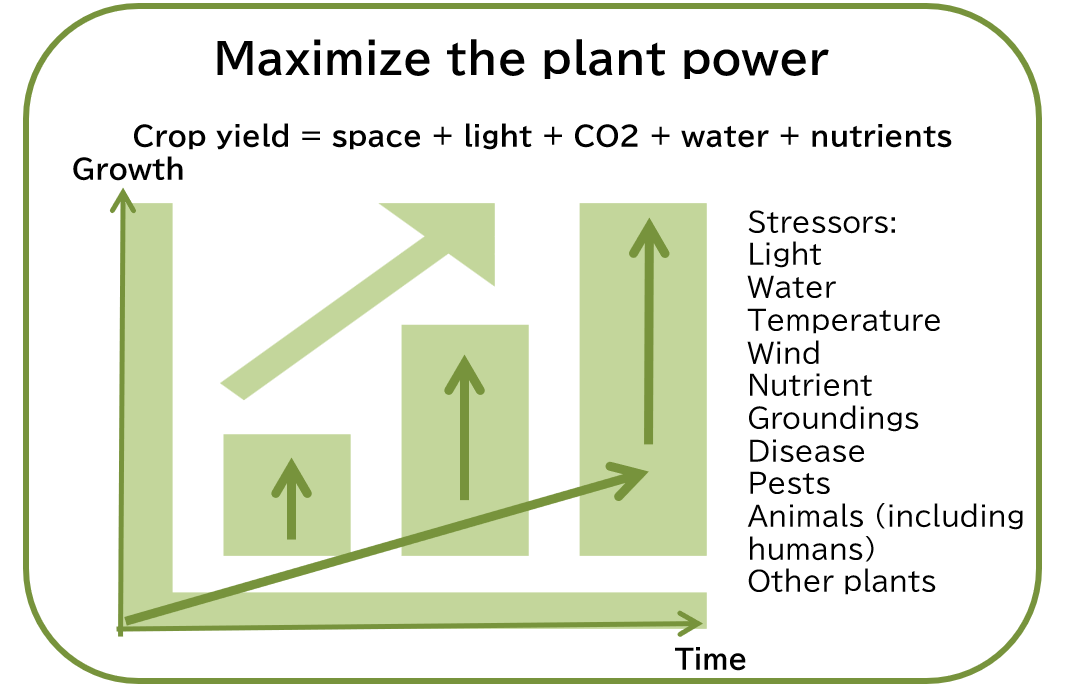
The growth of cultivated crops depends on several factors, such as the cultivation environment (temperature, humidity), light energy that is the basis of photosynthesis, water required for photosynthesis, carbon dioxide, nutrients necessary for growth, etc. AI Farming observes the cultivation environment based on this plant physiology and controls indoor equipment based on that data to provide the best possible growth environment for plants.
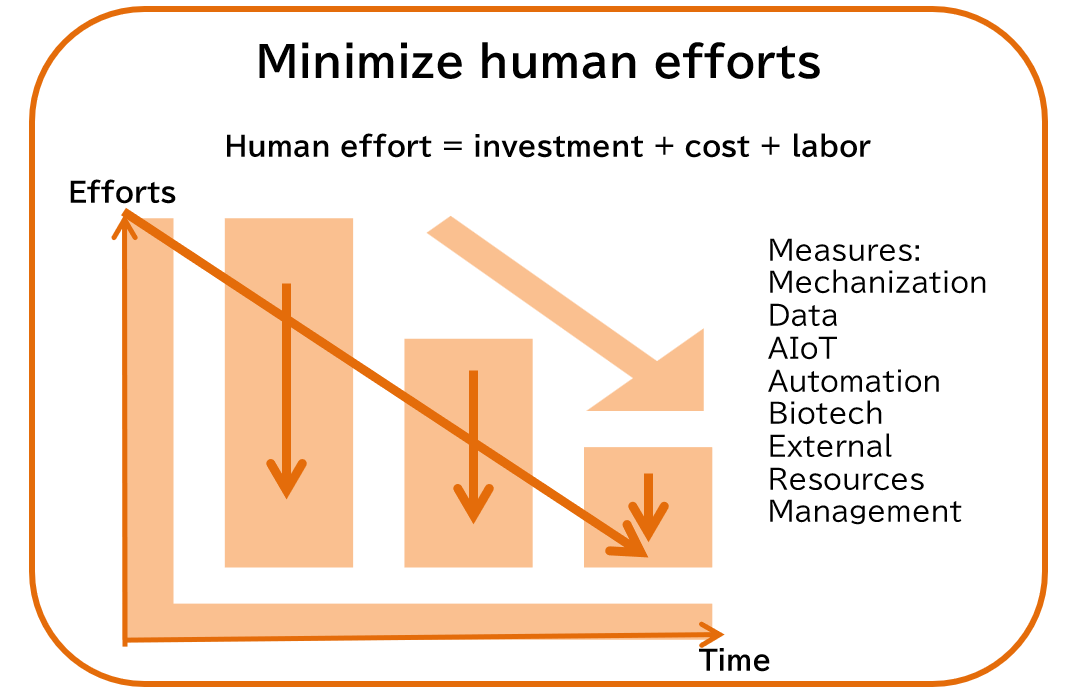
Since ancient times, agriculture has progressed through the use of human power, livestock power such as horses and cows, farming machinery, and the automation of farming operations. In indoor cultivation, the goal is to automate as much of the process as possible from sowing to harvesting. Sowing seeds, transplanting seedlings, and harvesting are challenges, and the introduction and cooperation of other technologies is necessary.
Two fundamental technologies
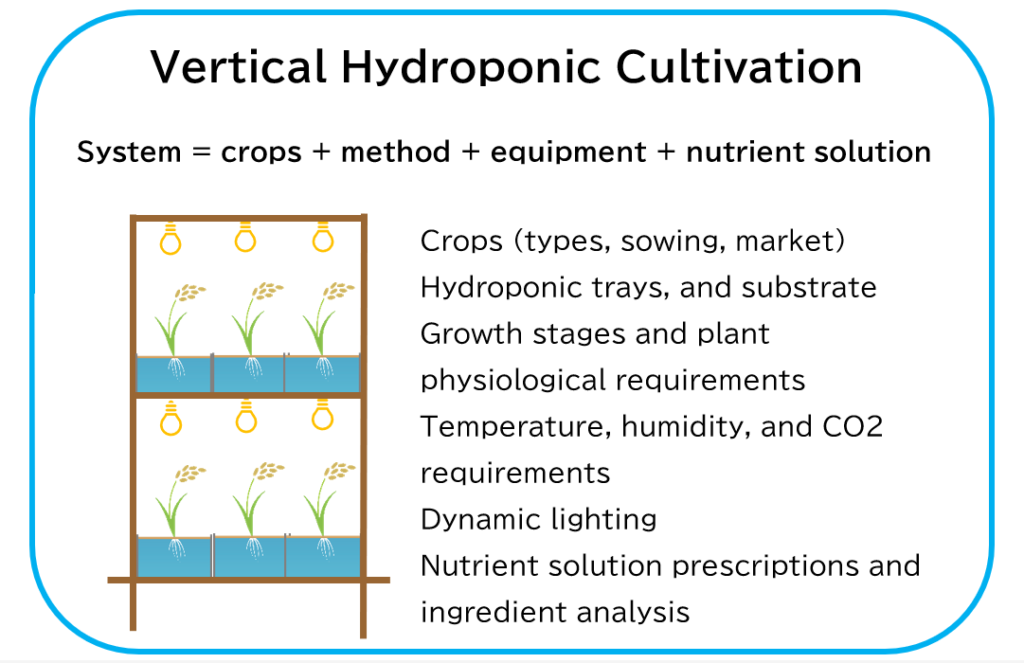
The greatest feature of this cultivation technique is that it secures a larger cultivation area by stacking hydroponic cultivation shelves vertically. Stacking cultivation shelves vertically is a method that allows for the cultivation of large quantities of crops even in a limited area.
This structure makes it possible to produce crops at high density even in a small space, making it possible to grow crops in places where traditional farming methods were not possible, such as urban areas and commercial facilities.
It is well-suited to local food production and consumption, and by reducing transportation costs and environmental impact, it is also expected to reduce food miles.
However, economic issues regarding initial investment and running costs (energy costs) have been pointed out, but research is underway to resolve these issues.
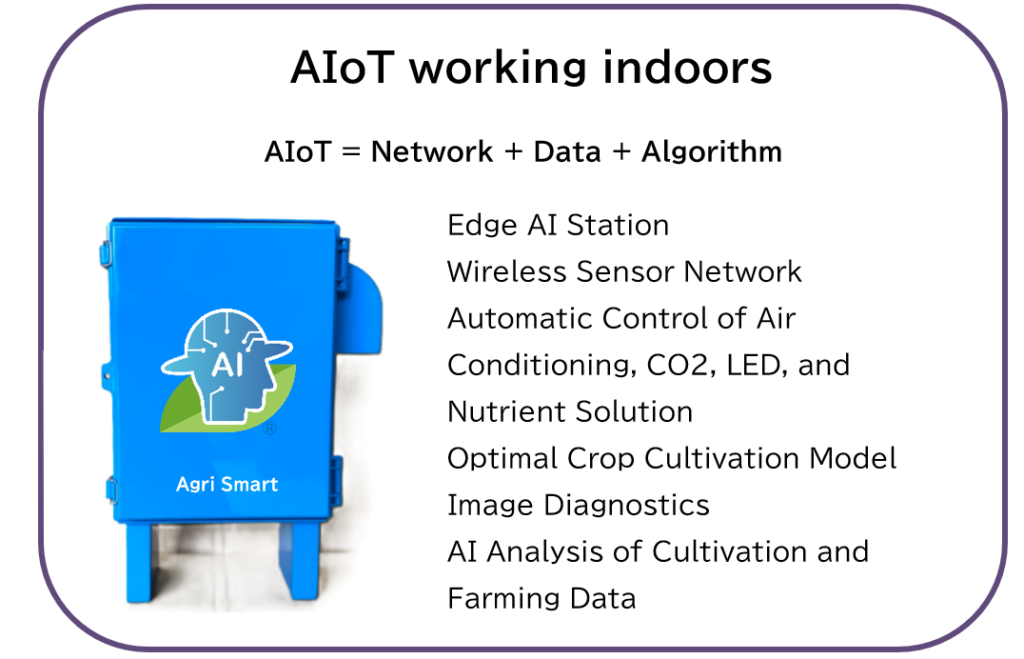
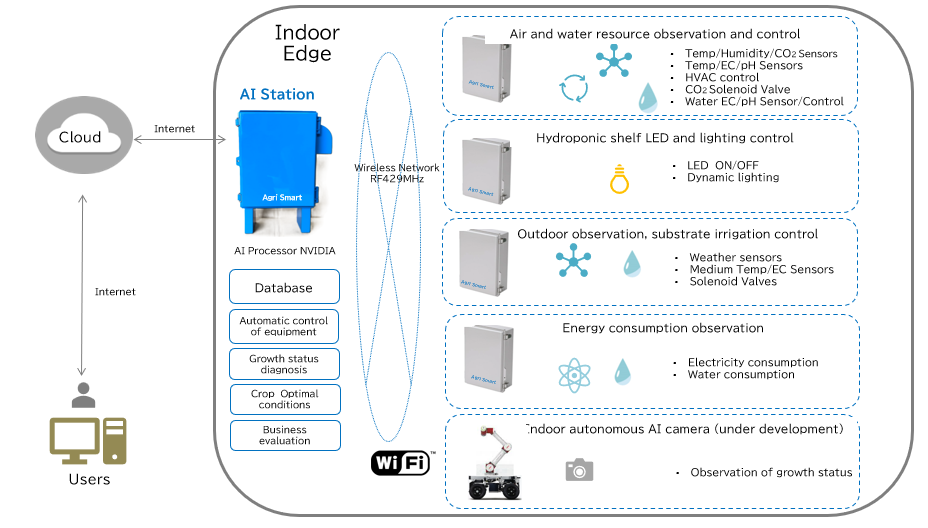
An AI Station is installed at indoor cultivation sites (edge), where observation data is stored on the edge, equipment is controlled, field data is analyzed, and optimal cultivation is achieved for each field.
AI farming can record larger amounts of data than a human can remember. It is good at detecting changes and differences, which is useful for detecting signs and abnormalities. It has a bird’s-eye view, is good at observing details with an insect’s eye, and observes changes with a fish’s eye.
However, since it cannot touch, taste, or feel things, AI farming plays a supporting role, acting as a farming and growth agent on behalf of farmers.
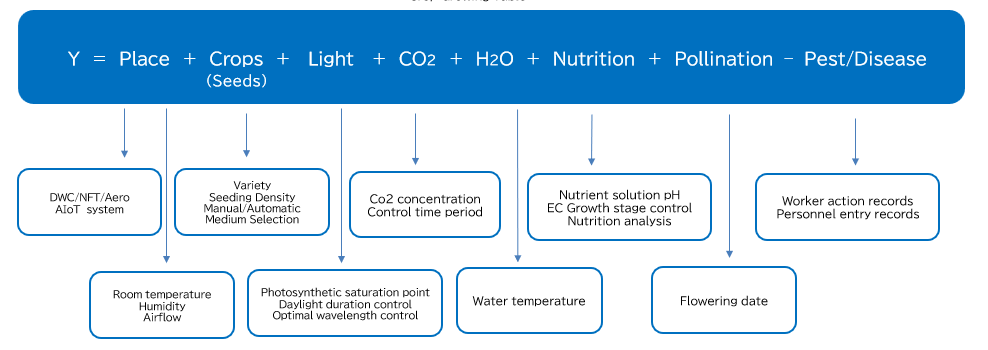
Basic formula
Crop production volume is expressed using a formula called the “Plant Power Equation,” which is then optimized using data and AI.
System configuration
The indoor space is connected via a wireless network, the environment is observed by sensors, and environmental equipment is controlled from the AI Station.
What we are challenging
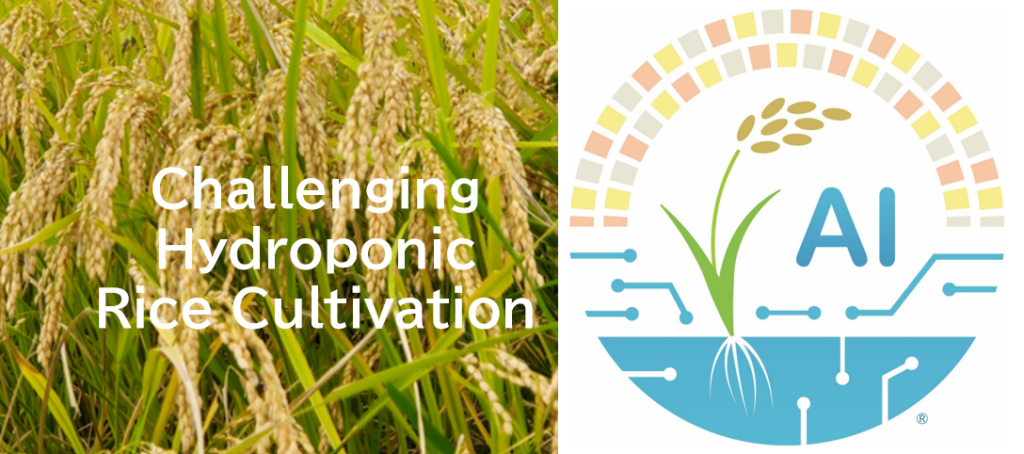
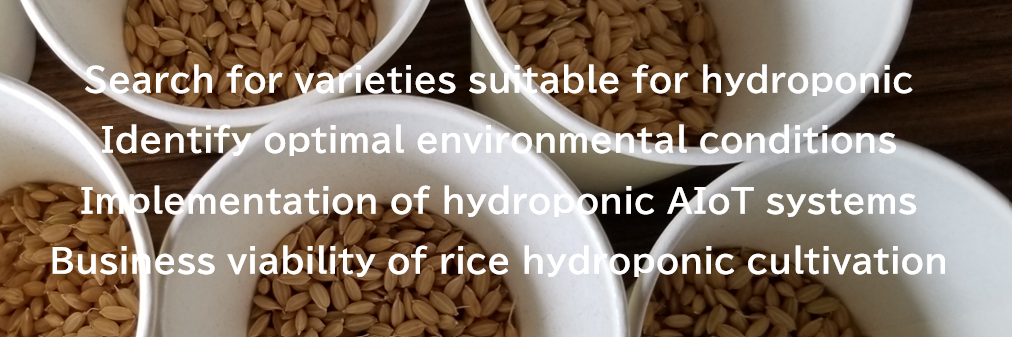
We have been challenging rice cultivation in indoor hydroponic system aiming for food security, environmental conservation and sustainability for future generations.
<Return to home>インドアAI ファーミングとは